

Nice Travel Guide: Transport, Sights & Mobile Data
Last updated: November 12, 2026 · ecoesim
In short
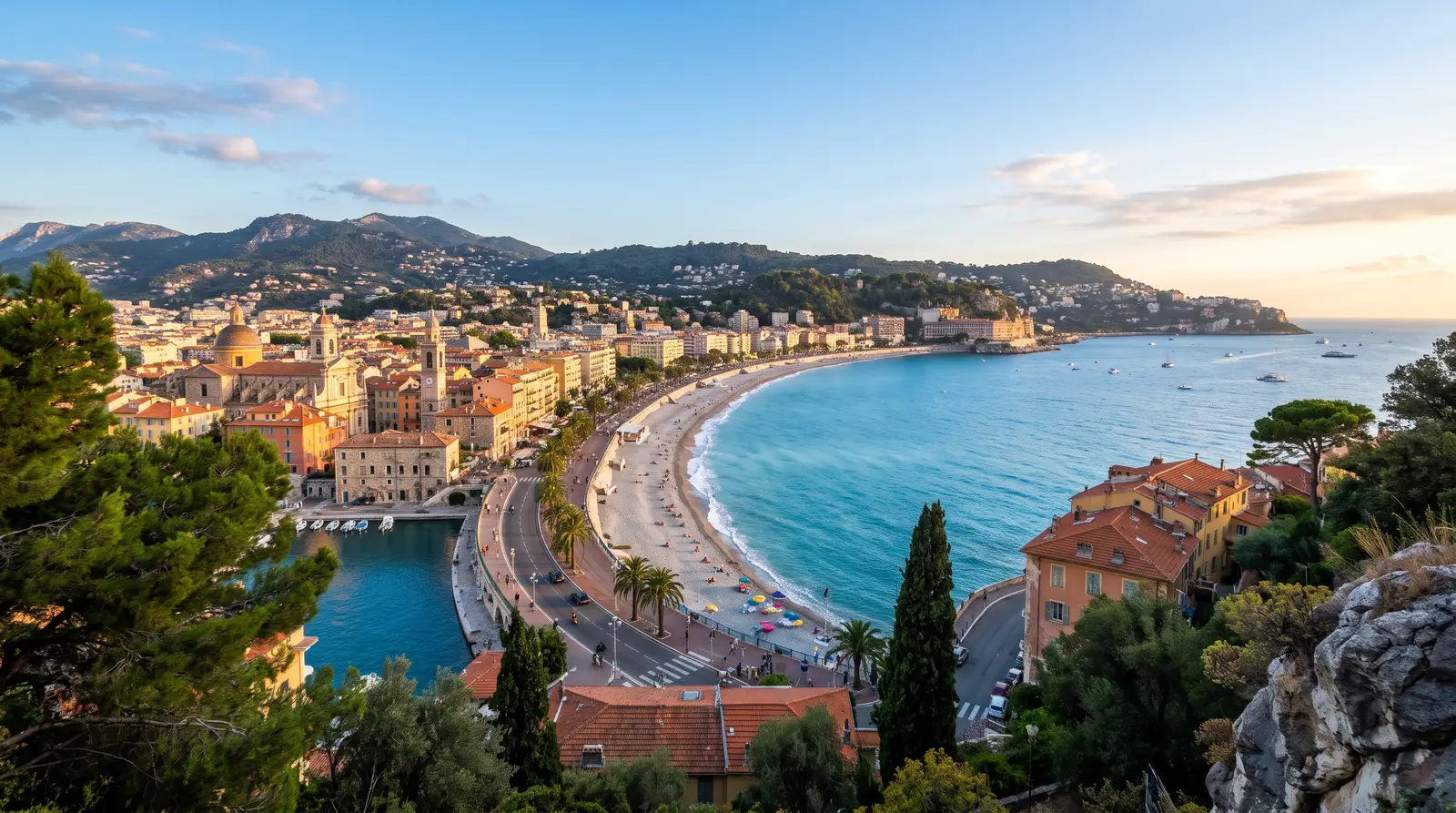
Nice, the heart of the French Riviera, stands out with its Mediterranean views, historic alleys, and delectable cuisine. Getting around by tram and train is exceptionally convenient; to use maps, ticketing, and travel apps without interruption, you can get a travel eSIM before your trip and quickly connect to the internet on the Orange network.
Nice: quick facts
- Mobile Networks
- Orange (5G available)
- Airport Transport
- Tram L2 (approx. 25–30 min)
- Transit Card
- La Carte (Lignes d’Azur) or mobile app
- Currency
- Euro (€) — Contactless card payments widely accepted
- Plug Type
- Types C and E (230V, 50Hz)
- Emergency Number
- 112 (General EU Emergency Number)
- Best Time to Visit
- May–June and September–October
eSIM plans for France
All plans for France →Mobile internet in Nice
A mobile data connection offers immense convenience for a hassle-free trip to Nice. Using the Lignes d’Azur app for tram and bus tickets, tracking train schedules on SNCF Connect, and navigating narrow alleys via map apps require continuous internet access. While free Wi-Fi networks like "Nice Nomade Public" exist throughout the city, they require registration and connections can drop while on the move. There are no internet restrictions across France; all messaging and map apps can be used freely.
Instead of hunting for a physical SIM card or paying high rates at the airport, you can opt for a travel eSIM. Data plans purchased through ecoesim for France provide high-speed 5G connectivity via the local Orange network. APN configuration is usually not required. You can install your eSIM profile on a Wi-Fi connection prior to your trip, and upon landing at Nice Côte d’Azur Airport, simply turn on data roaming on your eSIM line to connect directly. This allows you to keep your physical SIM card active and retain your WhatsApp number securely without changes.
Places to visit
Promenade des Anglais
Lined with palm trees and stretching 7 kilometres along the Baie des Anges, this world-famous promenade is perfect for strolling, cycling, and taking in the sunset. Planning about 1–2 hours is plenty. You can reach it on foot from the Old Town or by getting off at the Alsace-Lorraine stop on Tram Line L2. The beach is made of smooth pebbles (*galets*) rather than sand; water shoes are recommended if you plan to swim.
Vieux Nice (Old Town)
Featuring pastel-coloured 17th-century buildings, bustling squares, artisanal gelaterias, and local bistros serving the famous chickpea-flour pancake *socca*, this is the historic core of the city. You can set aside 2–3 hours to explore it. Step into the area by taking Tram Line L1 to the Opéra - Vieille Ville stop. Because network signals may weaken between the tall, narrow buildings, downloading your offline map in advance is very useful.
Colline du Château (Castle Hill)
A breathtaking panoramic viewpoint overlooking the Baie des Anges, the Port of Nice, and a man-made waterfall. Plan for 1.5–2 hours for your visit. You can head up by climbing the Montée Lesage steps from the Old Town or by taking the free lift (Ascenseur du Château) next to Tour Bellanda. The park gates close at sunset (check); keep in mind that there may be queues for the lift during the summer months.
Cours Saleya Market
An open-air market famous for its fresh fruit, vegetables, regional delicacies, and colourful flower stalls. Browsing here takes about 1 hour. It sits just steps south of Place Masséna and Vieux Nice. Stalls generally pack up around 13:00, so arriving no later than 12:30 is recommended; on Mondays, antique dealers replace the food vendors (check).
Place Masséna and Promenade du Paillon
The city's main square is renowned for its red-ochre Italianate buildings, chequered pavement tiles, and illuminated statues by Jaume Plensa. Taking in the square alongside the fountains of the adjacent expansive green corridor takes around 1 hour. You can reach the square by taking Tram L1 or L2 to the Masséna stop. Photographing the statues as they glow in different colours during the evening is particularly enjoyable.
Marc Chagall National Museum
A dedicated art museum home to Marc Chagall's monumental Biblical Message series of 17 paintings, along with his stained glass works and mosaics. You can allocate 1.5–2 hours for the visit. It is accessible via a 15-minute uphill walk from Nice-Ville train station or by taking bus line 5 to the Musée Chagall stop. The museum is closed on Tuesdays (check); booking a timed ticket online during the summer months is advisable.
Matisse Museum and Cimiez Ruins
Housed in a 17th-century Genoese villa, this museum displays Henri Matisse's personal collection right next to the ancient Roman amphitheatre ruins. The visit takes around 2 hours. From the city centre, take bus 5 or 33 and get off at the Arènes / Musée Matisse stop. The museum is closed on Tuesdays (check); consider looking into the multi-museum municipal pass (check).
St Nicholas Russian Orthodox Cathedral
Commissioned by Tsar Nicholas II and notable for its vibrant onion domes, this building is the largest Eastern Orthodox cathedral in Western Europe. The tour takes about 45 minutes. It can be reached on a 15-minute walk westward from Nice-Ville train station. A strict dress code requiring shoulders and knees to be covered is enforced at the entrance.
Port Lympia (Port of Nice)
Surrounded by Venetian-style buildings, this traditional harbour sees luxury yachts and traditional wooden fishing boats (*pointus*) moored side by side. Walking along the quayside takes about 1–1.5 hours. You can arrive directly via Tram L2 at its final stop, Port Lympia. During peak season, you can ride Lou Passagin, a free solar-powered boat that ferries passengers between both sides of the harbour.
Villa Ephrussi de Rothschild
Located on the Saint-Jean-Cap-Ferrat peninsula, this pink Belle Époque palace boasts nine distinct thematic gardens overlooking the Mediterranean Sea. You should set aside 2.5–3 hours here. You can take bus 15 from central Nice and get off at the Passable / Rothschild stop (about 35 minutes). Musical fountain shows in the gardens run every 20 minutes; buying your tickets in advance is recommended during summer.
Transport
The most practical way to reach the city centre from Nice Côte d’Azur Airport is Tram Line 2 (Tram L2). Departing from both terminals, the tram reaches Jean Médecin or Port Lympia in about 25–30 minutes. Ticket machines at the airport stations prominently display the €10 return ticket (check); however, travel between the terminals and the Grand Arénas stop is free. You can head to Grand Arénas and purchase a reloadable "La Carte" with a €2 card deposit (check) from the machines there, loading a single journey for €1.70 (check). Alternatively, you can take a taxi from official ranks (flat rates to the centre are roughly €32, check night rates) or request an Uber or Bolt from designated pick-up areas.
Local public transport is operated by Lignes d’Azur. Instead of paper tickets on trams and buses, the contactless "La Carte" card or the Lignes d'Azur Tickets smartphone app is used. A single journey costs €1.70 and includes transfers within 74 minutes (check). 1-day (€7) and 7-day (€20) unlimited passes are also available (check). You must tap your card or phone against the validator every time you board.
Accommodation
You can choose where to stay in Nice depending on your travel style. Vieux Nice (Old Town) is immensely popular for its historic atmosphere, dining, and lively nightlife; however, buildings rarely have lifts and it can get noisy at night. For those wanting to stay close to shopping boulevards and have flat walking access to both the main train station and the beach, Carré d'Or and the area around Jean Médecin offer the most comfortable choices. If you prefer a quieter, stylish vibe with modern cafes and neighbourhood eateries, the area around Port Lympia at the end of Tram Line 2 is an ideal pick.
Best time to visit
The best months to visit Nice are May–June and September–October. During these periods, sea temperatures are warm enough for swimming, the weather is sunny and mild, and the peak summer crowds have either not yet arrived or have dispersed. July and August are hot, humid, and busy, with hotel prices reaching their peak. In winter, February brings unique energy to the city thanks to the world-renowned Nice Carnival and the nearby Menton Lemon Festival.
Money and practical tips
The currency in France is the Euro (€). Contactless credit cards, Apple Pay, and Google Pay are accepted virtually everywhere, including bakeries and small cafes. Keeping €15–20 in cash with you is only necessary for market purchases and coin-operated public toilets. By law, a service charge is included in the bill (*service compris*); tipping is therefore not mandatory, though rounding up the bill or leaving 5–10% for good service is considered polite. Electrical outlets use standard European Type C and E plugs (230V, 50Hz). In any emergency, dial 112, valid across all of Europe.
Day trips
Nice makes a fantastic base for exploring the rest of the French Riviera without renting a car. Taking the TER regional train from Nice-Ville train station gets you to Monaco in just 20 minutes to wander around the casinos and harbour. The perched medieval village of Èze Village is easily reachable from the centre via bus lines 82 or 602 (check bus timetables). Villefranche-sur-Mer, renowned for its pebble-sand beaches and seaside cafes, is only a 7–10 minute train ride away. Heading west on the TER, you can reach historic walled Antibes and the glamorous marinas of Cannes in 15 to 30 minutes.
Frequently asked questions
Can I use an eSIM for mobile data in Nice?
Yes, by purchasing a France-compatible data plan through ecoesim, you can connect to Orange's 5G network without swapping your physical SIM card. Simply install your profile over Wi-Fi before your trip and activate data roaming when you land in Nice.
Will using an eSIM in France change my WhatsApp number?
No, because travel eSIMs only provide data connectivity, you can continue using your existing physical phone line and registered WhatsApp number without any interruption.
What is the easiest way to get from the airport to Nice city centre?
Tram Line L2, which departs directly from both terminals at Nice Côte d’Azur Airport, takes you straight to the city centre (Jean Médecin or Port Lympia stops) in about 25–30 minutes.
How do I buy public transport tickets in Nice?
Paper tickets are no longer used; you can buy a contactless "La Carte" for a €2 deposit (check) from station ticket machines or download the Lignes d'Azur Tickets app to purchase single or daily tickets on your phone.
Are the beaches in Nice sandy or pebbly?
The beaches in Nice consist of large, smooth pebbles (*galets*). Wearing water shoes is recommended for comfortable walking along the shore and getting into the sea.
Is it easy to take the train from Nice to other towns?
Yes, TER regional trains departing from Nice-Ville station reach coastal towns like Monaco, Cannes, Antibes, and Villefranche-sur-Mer comfortably in 10 to 30 minutes.
Sources
- frenchriviera.travel
- european-traveler.com
- francetravelvibe.com
- frenchriviera.travel
- nicepartylife.com
- youtube.com
- nicetrotter.fr
- bestofniceblog.com
- freewalkingtour.com
Prices, opening hours and ticket rules can change; check the official websites before you travel.